Our New Corporate ISP League Table for 2008, can be picked up free from our here.
This is our January 2008 baseline. It shows you exactly where the UKs largest companies sourced their Internet Services on the 20th of January, 2008.
Your chance to catch up with BT's ongoing battle with Verizon for the top slot. The new league table has been widened to include the Internet services of the companies that make up the "FTSE All Shares Index", including BAe, Tesco and Tomkins.
The big news is, that as the Internet services market suffer it's heaviest downturn since the Tech' Crash, UK based service providers are once again struggling to compete with their US counterparts.
Register when you pick up the league tables and we will send you the figures as soon as we have them.
Monday, March 10, 2008


Thursday, March 06, 2008
Julius Baer backs down over Wikileaks
A good day for free speech as Bank Julius Baer (BJB) decides not to pursue further action against the whistle blower site Wikileaks. If you recall they won an injunction in February to close the site down, that caused a mixture of concern about restrictions to freedom of speech and high entertainment over the inept methods of both Bank Julius Baer and the California courts to get the information off of the web.
But we shouldn't be too pleased, the law found in BJB's favour. BJB, has decided not to proceed because of the negative publicity the exclusive Swiss financial management company has received from the story. It has been posted on thousands of blogs and news feeds around the world, reaching in turn 100's of thousands of people who had never heard of either party - a sort disastrous viral anti-marketing!
But we shouldn't be too pleased, the law found in BJB's favour. BJB, has decided not to proceed because of the negative publicity the exclusive Swiss financial management company has received from the story. It has been posted on thousands of blogs and news feeds around the world, reaching in turn 100's of thousands of people who had never heard of either party - a sort disastrous viral anti-marketing!
CW: PanAm or VirginAtlantic
This weeks analyst call was a toughie for CWs pilgrim and his team of Energisers. I just watched webcast; skip the bit about the Caribbean, it's all phone minutes.
Times Online reported one analyst saying: “Their plans are far too long term for this market. They need a quicker fix than this.” Mate! Go find something else to analyse! If you haven't worked out that there is no quick fix for telco, you're' in the wrong job.
It's not a CW specific problem; it is the same for all the Telco's: After 100yrs of selling voice minutes somebody invented the Internet, and that's having the same effect that airliners had on oceanliners. Massive increase in traffic, loads of competition, and a huge drop in revenues per head as customer choice expands.
In todays financial markets this is a recipe for volatility, and volatility = risk. SO, vicious circle; everyone's risk averse, so everyone's looking for the quick fix, and there isn;t one. The answer for the service providers is to sell core services, to valuable customers over their own networks, and, once they have those customers keep them. Not so simple as it sounds.
After years of volatility, crashing stock prices and stranded passengers; the airline industry introduced Revenue Management in the '80's. They filled their planes with the customers who provided the best economic return. First class, business, early bookers, flexi-tickets, block bookers, loyalty card holders, late bookers all became categories that were given quota's, and managed using sophisticated booking models. They didn't invent anything, or come up with fabulous new killer services! They just provided a core service and managed their customers more effectively.
Telco's must do what the airlines did, introduce Revenue Management and fill their networks with valuable customers. It was realising this fact about 4 years ago that caused us to give up the day job and start BackChannel.
So, CW, PanAm or Virgin Atlantic? Personally, left to it's own devices I think CW has the potential to become a truly global telecoms provider; they have the network, the services, the contacts and the mindset to do the job. Question is; Do they have the time?
Times Online reported one analyst saying: “Their plans are far too long term for this market. They need a quicker fix than this.” Mate! Go find something else to analyse! If you haven't worked out that there is no quick fix for telco, you're' in the wrong job.
It's not a CW specific problem; it is the same for all the Telco's: After 100yrs of selling voice minutes somebody invented the Internet, and that's having the same effect that airliners had on oceanliners. Massive increase in traffic, loads of competition, and a huge drop in revenues per head as customer choice expands.
In todays financial markets this is a recipe for volatility, and volatility = risk. SO, vicious circle; everyone's risk averse, so everyone's looking for the quick fix, and there isn;t one. The answer for the service providers is to sell core services, to valuable customers over their own networks, and, once they have those customers keep them. Not so simple as it sounds.
After years of volatility, crashing stock prices and stranded passengers; the airline industry introduced Revenue Management in the '80's. They filled their planes with the customers who provided the best economic return. First class, business, early bookers, flexi-tickets, block bookers, loyalty card holders, late bookers all became categories that were given quota's, and managed using sophisticated booking models. They didn't invent anything, or come up with fabulous new killer services! They just provided a core service and managed their customers more effectively.
Telco's must do what the airlines did, introduce Revenue Management and fill their networks with valuable customers. It was realising this fact about 4 years ago that caused us to give up the day job and start BackChannel.
So, CW, PanAm or Virgin Atlantic? Personally, left to it's own devices I think CW has the potential to become a truly global telecoms provider; they have the network, the services, the contacts and the mindset to do the job. Question is; Do they have the time?
Friday, February 29, 2008
BackChannel has new products and a new website
Just a quick note to say thanks very much to those of you who were able to provide feedback on the new BackChannel website it was valuable, valid and consistent.
So, we learnt a lot and made some changes. Thanks to one particular mega value reviewer for his excellent critical analysis - " you really know how to mangle a metaphor !?" Regular readers will also have spotted I can't spell ether.
The release of the new product is driving this change, beta trials at number of carriers have been completed and initial feed back is that it both saves a great deal of the sales peoples time in gathering customer intelligence and reveals a lot of otherwise un-knowable detail on the use of IP Services by large organisations and within Fiber served buildings.
We will of course be continuing with our regular free reporting and market intelligence services: when you're monitoring nearly a million companies you learn some interesting stuff.
So, we learnt a lot and made some changes. Thanks to one particular mega value reviewer for his excellent critical analysis - " you really know how to mangle a metaphor !?" Regular readers will also have spotted I can't spell ether.
The release of the new product is driving this change, beta trials at number of carriers have been completed and initial feed back is that it both saves a great deal of the sales peoples time in gathering customer intelligence and reveals a lot of otherwise un-knowable detail on the use of IP Services by large organisations and within Fiber served buildings.
We will of course be continuing with our regular free reporting and market intelligence services: when you're monitoring nearly a million companies you learn some interesting stuff.
Tuesday, February 26, 2008
Google take stake in Unity TransPacific Fibre
Google has taken a stake in the Unity TransPacific super fibre linking the US Westcoast to Japan.
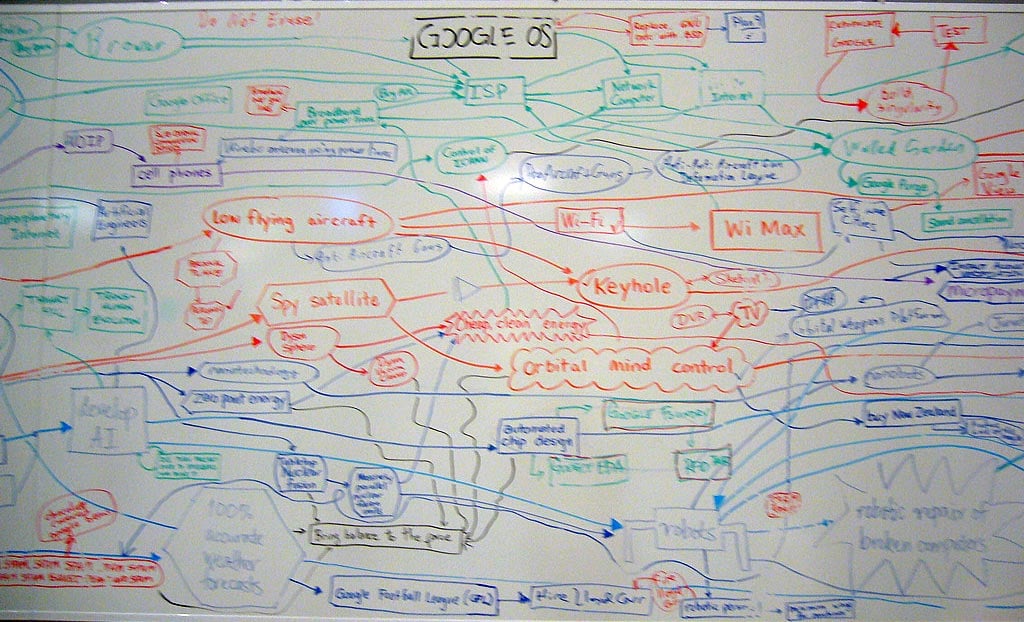
This is the Google that purchased a 270,000sq ft interconnect facility in New York in 2005. The Google that has a division engaged in acquiring dark national, international and metro-fiber. Is investing heavily in consumer WiMax, a mobile phone platform, mobile applications, oh and spectrum
Still think Google is a search engine and advertising company? Read on...
In 2006 Google was recognised by the American Registry of Internet Numbers (ARIN) as an ISP, when it was granted a large allocation of IPv6 addresses.
At the time of the allocation ARIN's director of external relations , Richard Jimmerson, said. "Any organization that has received (IPv6 addresses) has met that criteria -- and that would include Google,"
Note: IP v6 will enable the Internet address space to several trillion, trilion addresses, more than enough to absorb the current 4 billion IPv4 Internet addresses several times over. They must be planning an awfully big grid network, or is there more to it than meets the eye?
Nervous now? Get in line behind Microsoft; a queue is forming.
This is the Google that purchased a 270,000sq ft interconnect facility in New York in 2005. The Google that has a division engaged in acquiring dark national, international and metro-fiber. Is investing heavily in consumer WiMax, a mobile phone platform, mobile applications, oh and spectrum
Still think Google is a search engine and advertising company? Read on...
In 2006 Google was recognised by the American Registry of Internet Numbers (ARIN) as an ISP, when it was granted a large allocation of IPv6 addresses.
At the time of the allocation ARIN's director of external relations , Richard Jimmerson, said. "Any organization that has received (IPv6 addresses) has met that criteria -- and that would include Google,"
Note: IP v6 will enable the Internet address space to several trillion, trilion addresses, more than enough to absorb the current 4 billion IPv4 Internet addresses several times over. They must be planning an awfully big grid network, or is there more to it than meets the eye?
Nervous now? Get in line behind Microsoft; a queue is forming.
Friday, February 22, 2008
UK ISPs to face legal sanction's over downloads
The British government has given ISPs till April '09 to "get on board or face legal sanctions".
The moves follow similar legislation in France due to come into force this summer.
The Media folks will identify the file down-loader by joining BitTorrent storms, then pass lists of offenders to the ISPs and then require them to identify repeat offenders and cut them off from the Internet, probably by invoking breach of contract.
As Tiscali found - If it goes wrong, (surely not) you're on your own.
The moves follow similar legislation in France due to come into force this summer.
The Media folks will identify the file down-loader by joining BitTorrent storms, then pass lists of offenders to the ISPs and then require them to identify repeat offenders and cut them off from the Internet, probably by invoking breach of contract.
As Tiscali found - If it goes wrong, (surely not) you're on your own.
Thursday, February 21, 2008
Judge in WikiLeaks driven Dyna"dotty" as archives go P2P
The Wikileaks train now seems unstoppable. As due to massive pressure on their remaining servers the Whistle Blower has posted it's archives on a number of P2P sites including the notorious Piratebay.
Some good comment over on El Reg regards the Julius Baer/Dynadot/Wikileaks debacle, which shows that the judiciary have no clear understanding of how the Internet works, or even that its geography extends beyond the bounds of their jurisdiction.
Being a working guy, and unlikely ever to need their services, I had hardly heard of Julius Baer and their spat with Wikileaks. If you want to know more about the "due process" take a look at Cryptome it has chapter and verse including all the legal two'ing and fro'ing
This is the kind of viral marketing JB could do without.
Some good comment over on El Reg regards the Julius Baer/Dynadot/Wikileaks debacle, which shows that the judiciary have no clear understanding of how the Internet works, or even that its geography extends beyond the bounds of their jurisdiction.
Being a working guy, and unlikely ever to need their services, I had hardly heard of Julius Baer and their spat with Wikileaks. If you want to know more about the "due process" take a look at Cryptome it has chapter and verse including all the legal two'ing and fro'ing
This is the kind of viral marketing JB could do without.
Tuesday, February 19, 2008
ISP Executives in firing line as Governments move on online privacy
Senior Executives within ISPs will be calling in the lawyers this week.
Why? well it's been an interesting week for on-line privacy, freedom of speech and data protection; with the ISPs being moved firmly centre stage again.
In the UK, the Labour government has presented a Green Paper that will coerce ISPs to monitor their customers Internet traffic for illicit content. Recidivists will have their connection cut off, and to stop them doing it again, their names could be entered into a central database of law breakers, to be circulated to other ISPs, government agencies and potentially even to the owners of the content.
In the USA, the Protect America Act has been passed allowing the NSA to filter the day to day emails and web content of both Foreign and US Citizens, in the ongoing search for Al Queda.
Finally, Tiny Californian ISP Dynadot which hosts whistle blower site Wikileaks was forced to hand over the site, contents, supporting literature and all log data to the courts.
So what is the potential fall out for the service providers?
The US government has stated that ISPs who voluntarily co-operate will be protected from litigation by their customers. But we know from experience that won't stop the lawyers having a bash at a few multi-billion$ class actions.
The UK Government has also promised protection for the ISPs. But refusal by the media industry to indemnify the likes of Tiscali against costs involved in fighting prosecution, has already caused that company's attempt to implement the "three strikes" proposal to collapse in disarray. As the process is equivalent to asking the postal service to open and vet every package and letter in the system, there is surely plenty of scope for litigation.
Even after the legislation I foresee many IT Illiterate parents carted away as their kids continued to download music without their knowledge, as well as the media industry choosing to pursue teenagers for individual criminal actions.
It's just a matter of time before ISPs find themselves under siege from the lawyers of those prevented from accessing the Public Internet, email and possibly even phone services, or for abetting the media companies in malicious prosecutions.
Dynaspot shows that ISPs will increasingly being held accountable for the content and themes of web sites that they host, and the authorities will support action against them.
So why should the Senior Executives worry; well there is currently little protection in law that will protect them from irate customer. Reviewing the 2002 Electronic Communications Act (figleaf) passed to protect ISPs who remove content from customers websites.
The Dynaspot case is the final proof that if ISPs don't co-operate they will face court action, heavy fines and even jail.
Oh you're outside the US / UK! "Don't get comfortable folks" - the gaming industry thought they were safe until their CEOs started finding themselves held in US jails for wire fraud and racketeering.
Those ISPs in hosting havens like Finland and Norway should bare in mind that a US arrest warrant cost Swedish Skype founder Niklas Zennstrom $100m, he can afford it, but can you!
Why? well it's been an interesting week for on-line privacy, freedom of speech and data protection; with the ISPs being moved firmly centre stage again.
In the UK, the Labour government has presented a Green Paper that will coerce ISPs to monitor their customers Internet traffic for illicit content. Recidivists will have their connection cut off, and to stop them doing it again, their names could be entered into a central database of law breakers, to be circulated to other ISPs, government agencies and potentially even to the owners of the content.
In the USA, the Protect America Act has been passed allowing the NSA to filter the day to day emails and web content of both Foreign and US Citizens, in the ongoing search for Al Queda.
Finally, Tiny Californian ISP Dynadot which hosts whistle blower site Wikileaks was forced to hand over the site, contents, supporting literature and all log data to the courts.
So what is the potential fall out for the service providers?
The US government has stated that ISPs who voluntarily co-operate will be protected from litigation by their customers. But we know from experience that won't stop the lawyers having a bash at a few multi-billion$ class actions.
The UK Government has also promised protection for the ISPs. But refusal by the media industry to indemnify the likes of Tiscali against costs involved in fighting prosecution, has already caused that company's attempt to implement the "three strikes" proposal to collapse in disarray. As the process is equivalent to asking the postal service to open and vet every package and letter in the system, there is surely plenty of scope for litigation.
Even after the legislation I foresee many IT Illiterate parents carted away as their kids continued to download music without their knowledge, as well as the media industry choosing to pursue teenagers for individual criminal actions.
It's just a matter of time before ISPs find themselves under siege from the lawyers of those prevented from accessing the Public Internet, email and possibly even phone services, or for abetting the media companies in malicious prosecutions.
Dynaspot shows that ISPs will increasingly being held accountable for the content and themes of web sites that they host, and the authorities will support action against them.
So why should the Senior Executives worry; well there is currently little protection in law that will protect them from irate customer. Reviewing the 2002 Electronic Communications Act (figleaf) passed to protect ISPs who remove content from customers websites.
The Dynaspot case is the final proof that if ISPs don't co-operate they will face court action, heavy fines and even jail.
Oh you're outside the US / UK! "Don't get comfortable folks" - the gaming industry thought they were safe until their CEOs started finding themselves held in US jails for wire fraud and racketeering.
Those ISPs in hosting havens like Finland and Norway should bare in mind that a US arrest warrant cost Swedish Skype founder Niklas Zennstrom $100m, he can afford it, but can you!
Wednesday, February 06, 2008
Managed Hosted Service in USA: Comparitive strength of vendor
As part of a wider survey of the use of Internet services by over 500,000 organisations in the USA we surveyed the Messagelabs/Postini/MS Frontbridge market for Managed AntiSPAM - AntiVirus services.
Courtesy of our friends at ManyEyes (IBMs visualisation business) Here is something for you play with; just click on the charts title.
The Control is the normal distribution of organisations by state.
Courtesy of our friends at ManyEyes (IBMs visualisation business) Here is something for you play with; just click on the charts title.
The Control is the normal distribution of organisations by state.
Monday, February 04, 2008
Pipex Business to lose prime asset - It's name!
Tiscali's acquisition of the Pipex Broadband last year, has had an interesting knock on. It appears that as part of the deal Tiscali acquired the PIPEX brand; so the business end of the operation has got to change it's name. The new name for PIPEX Business is apparently Vialtus .
It's been a long journey for the PIPEX name, since the Monday morning in 1991 when the original founder, Peter Dawe, bounced into my office and said "hey Steve; Public IP Exchange - PIPEX, what do you reckon?!" I doubt it mattered what I thought, but he was clearly excited. For weeks he had been struggling to find a really "meaningful and pointy" name for the UKs first commercial Internet services provider.
Despite many changes of hands, PIPEX has remained a benchmark of the UK internet scene; justifiably known for it's quality products, support and services ethos. Pipex continued to grow business customers even as it became better known for its consumer offerings.
Losing such an established brand identity is a big issue for any business. But for an established ISP, ouch!! Ofcom reference over 500 ISPs in the UK; even when you take out those who are just reselling other peoples services, it's still over 170 competitors servicing UK business.
The market is overcrowded, economic situation is tightening and competition for corporate customers is now from international players like AT&T, Colt, Verizon and Rackspace. Even with a big bag of money from the sale of the consumer business; it's a brave time to launch a new brand.
So what next, well with the PIPEX name gone we think another power brand is likely to step in and pick up the business; as well as a lot of customers it has some very desirable physical assets.
Cable & Wireless, THUS, and Oakley Capital have all been named as possible suitors. Given their stated strategy of shedding customers, it would be mixed signals to the city from C&W, Oakley would probably want it for "parts", increasingly successful UK operator THUS would seem to make much more sense.
Who knows, BT might even re-enter the fray; our latest research data, published next week, shows it could sorely use a couple of percent more market share in it's ongoing battle for corporate IP customers with US giant Verizon.
It's been a long journey for the PIPEX name, since the Monday morning in 1991 when
Despite many changes of hands, PIPEX has remained a benchmark of the UK internet scene; justifiably known for it's quality products, support and services ethos. Pipex continued to grow business customers even as it became better known for its consumer offerings.
Losing such an established brand identity is a big issue for any business. But for an established ISP, ouch!! Ofcom reference over 500 ISPs in the UK; even when you take out those who are just reselling other peoples services, it's still over 170 competitors servicing UK business.
The market is overcrowded, economic situation is tightening and competition for corporate customers is now from international players like AT&T, Colt, Verizon and Rackspace. Even with a big bag of money from the sale of the consumer business; it's a brave time to launch a new brand.
So what next, well with the PIPEX name gone we think another power brand is likely to step in and pick up the business; as well as a lot of customers it has some very desirable physical assets.
Cable & Wireless, THUS, and Oakley Capital have all been named as possible suitors. Given their stated strategy of shedding customers, it would be mixed signals to the city from C&W, Oakley would probably want it for "parts", increasingly successful UK operator
Who knows, BT might even re-enter the fray; our latest research data, published next week, shows it could sorely use a couple of percent more market share in it's ongoing battle for corporate IP customers with US giant Verizon.
Wednesday, December 05, 2007
Managed Hosted Service in USA
More Visualisation trials: This shows the distribution of sales of a Managed Hosted Service by six service providers. In the drop down you will see companies 1-6 and a Control. Control is the distribution of businesses in the Continental USA.

 The sample data are 552,000 US Organisations, excluding Micro-Business. Use the zoom facility it is very cool, hopefully we will get it down to City level on this sort of public interface; In our client systems we are there already and can map down to street/building level.
The sample data are 552,000 US Organisations, excluding Micro-Business. Use the zoom facility it is very cool, hopefully we will get it down to City level on this sort of public interface; In our client systems we are there already and can map down to street/building level.
Tuesday, December 04, 2007
Visualisations role in data presentation
We are more and more experimenting with visualisation tool kits to find ways of representing the huge data sets we are working with.
Here is a small data set of 203, presented with Many Eyes; part of the IBM visualisation project. It represents a raw count of the IP services consumed in 5 major London office blocks including Tower 42 in Old Broad Street and CityPoint 1 Ropemaker Place.

This was part of a project we undertook earlier in the Year for a company on that list who wanted to take some business off of their competitors.
Here is a small data set of 203, presented with Many Eyes; part of the IBM visualisation project. It represents a raw count of the IP services consumed in 5 major London office blocks including Tower 42 in Old Broad Street and CityPoint 1 Ropemaker Place.
This was part of a project we undertook earlier in the Year for a company on that list who wanted to take some business off of their competitors.
Wednesday, November 14, 2007
CWs Pilgrim continues to progress
We have promised to keep you abreast of what John Pluthero and his team of re-Energisers are doing at the revitalised Cable & Wireless.
On arriving at C&W The Pilgrim's shocking mantra was "Only sell to profitable customers!", with instructions to the whole business to start shedding those customers who didn’t add solid value to C&W's bottom line.
What he saw clearly in C&W was the need to manage the revenue of each and every customer, and if the customer isn't profitable, they have to come off the books.
More importantly the new management team accepted something fundamental; It's not about the number of broadband subscribers you can boast or the cool new Linux hosting service; running a successful Telco' is about increased profit and improved execution.
And, there is no doubt this is paying off. Cable & Wireless announced half year figures this week and showed a jump in earnings of 29% EBITDA (Earnings Before Interest, Tax, Deductions and Amortisation), alongside a reduction in turnover of some 10%.
This turnaround has earnt Pilgrim a kick upstairs with the notice that John Pluthero is taking the reigns of global operations with immediate effect, announced at the same time. Former chief of International, Harris Jones, heads back to the pavilion with a reported £4.6m stuffed in his back pocket.
NB: BackChannels ongoing analysis of ISP market share amongst major corporate accounts shows C&W continues to have very low, in fact negligible customer churn in amongst their major accounts, we’ll let you know if this rolls over into international for them.
On arriving at C&W The Pilgrim's shocking mantra was "Only sell to profitable customers!", with instructions to the whole business to start shedding those customers who didn’t add solid value to C&W's bottom line.
What he saw clearly in C&W was the need to manage the revenue of each and every customer, and if the customer isn't profitable, they have to come off the books.
More importantly the new management team accepted something fundamental; It's not about the number of broadband subscribers you can boast or the cool new Linux hosting service; running a successful Telco' is about increased profit and improved execution.
And, there is no doubt this is paying off. Cable & Wireless announced half year figures this week and showed a jump in earnings of 29% EBITDA (Earnings Before Interest, Tax, Deductions and Amortisation), alongside a reduction in turnover of some 10%.
This turnaround has earnt Pilgrim a kick upstairs with the notice that John Pluthero is taking the reigns of global operations with immediate effect, announced at the same time. Former chief of International, Harris Jones, heads back to the pavilion with a reported £4.6m stuffed in his back pocket.
NB: BackChannels ongoing analysis of ISP market share amongst major corporate accounts shows C&W continues to have very low, in fact negligible customer churn in amongst their major accounts, we’ll let you know if this rolls over into international for them.
Tuesday, November 06, 2007
NextGen Network roll out threatens ISP Major Accounts
BackChannels latest research shows that 77% of Telco' major accounts buy their Internet access from other providers and this rockets to nearly 90% for hosted Internet services such as web hosting, collocation, managed email and DNS services.
It appears that a 'network as a utility' mentality has developed in the purchase of Internet services, and that represents a significant threat to Big Telco's core revenue streams.
Customers see technology migration as an opportunity to tender out, and due to the flexible nature of IP this 'utility' mentality in the acquisition of Internet services is slowly starting to effect customer attitudes to Private IP infrastructure.
As the telecommunications industry progresses towards all IP Next Generation Networks (NGNs) new threats to their position are arising all the time; VoIP, Streaming media, Web 2.0, Software as a Service, Google… All are becoming more & more stable and running over super cheap bandwidth that business now buy like electricity.
So, as providers of private data networks race to transition to IP based infrastructure, they need to have strategy and tactics in place to manage the process.
Over the next few months BackChannel will launch a series of new sales management and business support systems that will help the successful migration process.
It appears that a 'network as a utility' mentality has developed in the purchase of Internet services, and that represents a significant threat to Big Telco's core revenue streams.
Customers see technology migration as an opportunity to tender out, and due to the flexible nature of IP this 'utility' mentality in the acquisition of Internet services is slowly starting to effect customer attitudes to Private IP infrastructure.
As the telecommunications industry progresses towards all IP Next Generation Networks (NGNs) new threats to their position are arising all the time; VoIP, Streaming media, Web 2.0, Software as a Service, Google… All are becoming more & more stable and running over super cheap bandwidth that business now buy like electricity.
So, as providers of private data networks race to transition to IP based infrastructure, they need to have strategy and tactics in place to manage the process.
Over the next few months BackChannel will launch a series of new sales management and business support systems that will help the successful migration process.
Wednesday, July 18, 2007
Tiscali buys out PIPEX Consumer Business
This weeks announcement that PIPEX is to sell off it's consumer business to Tiscali for £210m ($420m) will be no surprise to those who are following the increasing desperate consolidation of consumer Internet access.
A surprise to some, and relief to it's many business customers is that PIPEX plans to continue as a provider of Business DSL. Assuming that the deal is along the lines of the Bulldog customer account transfer this looks like being a result for PIPEX, having paid £109($218) each for Bulldogs customers they have sold them on for in excess of £400($800) each.
As media and the mobile operators are driving the price of consumer Internet down to "not free, but just about" . PIPEXs move back to higher value business services comes at just the right time.
Only question is what will happen to the Hoff, will he stop dyeing his hair maybe buy a Lexus and a nice suit?
A surprise to some, and relief to it's many business customers is that PIPEX plans to continue as a provider of Business DSL. Assuming that the deal is along the lines of the Bulldog customer account transfer this looks like being a result for PIPEX, having paid £109($218) each for Bulldogs customers they have sold them on for in excess of £400($800) each.
As media and the mobile operators are driving the price of consumer Internet down to "not free, but just about" . PIPEXs move back to higher value business services comes at just the right time.
Only question is what will happen to the Hoff, will he stop dyeing his hair maybe buy a Lexus and a nice suit?
Tuesday, July 10, 2007
Google and Postini Senior Execs Talk about the Acquisition
It's worth a trip printing off the charts below and heading over to ZDNets Blog to listen to Dave Girourd, vice president and general manager, Google Enterprise, and CEO, Postini Scott Petry, founder, CTO and exec VP of product development, talk about the thinking behind the acquisition and the integration of Postini.


It gets a bit nerdy in places but is worth listening to get a view of how the combined company plans to interoperate with other alternative application vendors such as the Mozilla Foundation, and to make the experience for the serious business user, well 'more serious'.


It gets a bit nerdy in places but is worth listening to get a view of how the combined company plans to interoperate with other alternative application vendors such as the Mozilla Foundation, and to make the experience for the serious business user, well 'more serious'.
Monday, July 09, 2007
Google to acquire Postini leading US Mail security vendor
Breaking news in the informartion security area is that Google is to acquire the US leading email security vendor Postini .
In April this year Postini and Google announced a strategic tie up for the consumer oriented Gmail.
Now (July 9th) it is announced Google will acquire Postini for $625 million in cash, subject to working capital and other adjustments, and Postini will become a wholly-owned subsidiary of Google.
Dave Girouard, Vice President and General Manager of Google Enterprise. said "The response to Google Apps has been tremendous, with more than 1,000 small businesses signing up for the service every day. At the same time, large businesses have been reluctant to move to hosted applications due to issues of security and corporate compliance. By adding Postini products to Google's technology, businesses no longer have to choose -- employees get the intuitive products they want, and the company achieves the security and assurance it needs,"
CEO Eric Schmidt commenting on the addition of Postini to the Google Apps portfolio said "With this transaction, we're reinforcing our commitment to delivering compelling hosted applications to businesses of all sizes. With the addition of Postini, our apps are not just simple and appealing to users -- they can also streamline the complex information security mandates within these organizations,"
The news comes as this sector hits hypergrowth. As second quarter of 2007 saw a hockey stick in the adoption of managed hosted mail security, it also saw Googles arch rival Microsoft growing deployments of the Exchange Hosted Services Portfolio based around their strong Frontbridge solution.
This strategic move by Google looks to have slipped them ahead of the game;
Here is the market share data for use of these services amongst some of the worlds largest corporates. The FTSE350 and the Fortune 1000.
As you will see, we left the old names on but here for completeness...
Postini = Google, Frontbridge = Microsoft, BlackSpider = Websense and Messagelabs well there still Messagelabs.
In April this year Postini and Google announced a strategic tie up for the consumer oriented Gmail.
Now (July 9th) it is announced Google will acquire Postini for $625 million in cash, subject to working capital and other adjustments, and Postini will become a wholly-owned subsidiary of Google.
Dave Girouard, Vice President and General Manager of Google Enterprise. said "The response to Google Apps has been tremendous, with more than 1,000 small businesses signing up for the service every day. At the same time, large businesses have been reluctant to move to hosted applications due to issues of security and corporate compliance. By adding Postini products to Google's technology, businesses no longer have to choose -- employees get the intuitive products they want, and the company achieves the security and assurance it needs,"
CEO Eric Schmidt commenting on the addition of Postini to the Google Apps portfolio said "With this transaction, we're reinforcing our commitment to delivering compelling hosted applications to businesses of all sizes. With the addition of Postini, our apps are not just simple and appealing to users -- they can also streamline the complex information security mandates within these organizations,"
The news comes as this sector hits hypergrowth. As second quarter of 2007 saw a hockey stick in the adoption of managed hosted mail security, it also saw Googles arch rival Microsoft growing deployments of the Exchange Hosted Services Portfolio based around their strong Frontbridge solution.
This strategic move by Google looks to have slipped them ahead of the game;
Here is the market share data for use of these services amongst some of the worlds largest corporates. The FTSE350 and the Fortune 1000.
As you will see, we left the old names on but here for completeness...
Postini = Google, Frontbridge = Microsoft, BlackSpider = Websense and Messagelabs well there still Messagelabs.
Wednesday, July 04, 2007
Notes on the potential auction of Virgin Media
On the 2nd July it came out that Carlyle Group had made an offer of about $11bn for Virgin Media $11bn for Virgin Media
On the 4th of July it was reported that Virgin Medias bankers inc' Goldman Sachs were preparing detailed financial presentations for other prospective suitors amongst the Private Equity community.
We've often commented on the similarities between the ISP businesses of Virgin Media and BSkyB, NTLTelewest and EasyNet respectively.
Both these companies are in the UK 'top ten' business Internet market shares Each has about 3% share of the UK businesses with a turnover up to £125m ($250m).
The chart below profiles each companies Internet Access customers (amongst a representative sample of 80,000 in January 2007) as I mentioned before each company has near enough 3% share overall.

NTL Telewest, which claims to offer service coverage to 85% of UK business, is an established and interesting ISP, one that has managed to retain a leadng position in the UK ISP marketdespite suffering from the failing strength of the NTL consumer brand.
As the second largest provider fixed line telephone services and having already sunk an estimated £13bn into its NGN/All IP infrastructure. Perhaps a move into the hands of a private equity firm might see a resurgence in it's fortunes.
On the 4th of July it was reported that Virgin Medias bankers inc' Goldman Sachs were preparing detailed financial presentations for other prospective suitors amongst the Private Equity community.
We've often commented on the similarities between the ISP businesses of Virgin Media and BSkyB, NTLTelewest and EasyNet respectively.
Both these companies are in the UK 'top ten' business Internet market shares Each has about 3% share of the UK businesses with a turnover up to £125m ($250m).
The chart below profiles each companies Internet Access customers (amongst a representative sample of 80,000 in January 2007) as I mentioned before each company has near enough 3% share overall.

NTL Telewest, which claims to offer service coverage to 85% of UK business, is an established and interesting ISP, one that has managed to retain a leadng position in the UK ISP marketdespite suffering from the failing strength of the NTL consumer brand.
As the second largest provider fixed line telephone services and having already sunk an estimated £13bn into its NGN/All IP infrastructure. Perhaps a move into the hands of a private equity firm might see a resurgence in it's fortunes.
Tuesday, July 03, 2007
Protecting legacy customer revenues
BackChannel is offering a major account profiling service, which allows service providers to gain a complete overview of the Public Internet services brought by their largest strategic accounts on a country buy country, or worldwide basis.
The worlds’ largest Telco operators have thousands of major accounts that generate billions of $ in revenue from a mixture of fixed & mobile telephony and legacy private data services.
These legacy accounts are the corporate crown jewels of the business providing some with up to 70% of their turnover.
Big Telco’ around the world have become experts at weaving themselves into the fabric of these customers strategic private telecommunications infrastructure; not so their public facing IP infrastructure.
BackChannels latest research shows that 77% of major accounts buy their Internet access from other providers and this rockets to nearly 90% for other Internet services such as web hosting, collocation, managed email and DNS services.
A ‘network as a utility’ mentality has developed in the purchase of public Internet services, and that represents a significant threat to these core revenue streams.
Customers see technology migration as an opportunity to tender out, and due to the flexible nature of IP this ‘utility’ mentality in the acquisition of Internet services is slowly starting to effect customer attitudes to Private IP infrastructure.
As the telecommunications industry progresses towards all IP Next Generation Networks (NGNs) new threats to their position are arising all the time; VoIP, Streaming media, Web 2.0, Software as a Service, Google… All are becoming more & more stable and running over super cheap bandwidth that business now buy like electricity.
The worlds’ largest Telco operators have thousands of major accounts that generate billions of $ in revenue from a mixture of fixed & mobile telephony and legacy private data services.
These legacy accounts are the corporate crown jewels of the business providing some with up to 70% of their turnover.
Big Telco’ around the world have become experts at weaving themselves into the fabric of these customers strategic private telecommunications infrastructure; not so their public facing IP infrastructure.
BackChannels latest research shows that 77% of major accounts buy their Internet access from other providers and this rockets to nearly 90% for other Internet services such as web hosting, collocation, managed email and DNS services.
A ‘network as a utility’ mentality has developed in the purchase of public Internet services, and that represents a significant threat to these core revenue streams.
Customers see technology migration as an opportunity to tender out, and due to the flexible nature of IP this ‘utility’ mentality in the acquisition of Internet services is slowly starting to effect customer attitudes to Private IP infrastructure.
As the telecommunications industry progresses towards all IP Next Generation Networks (NGNs) new threats to their position are arising all the time; VoIP, Streaming media, Web 2.0, Software as a Service, Google… All are becoming more & more stable and running over super cheap bandwidth that business now buy like electricity.
Tuesday, June 26, 2007
Messagelabs: Jolly Hockeysticks
Hosted Email Security Services hit an inflection point at the beginning of June 2007 with a sudden uptick in installations across the board in the UK.
For those of you not completely familiar with this service it is an "In the network service" where inbound email is redirected to a 3rd party data centre where the email is scanned for SPAM, Viruses and then returned all clean and shiney.
Whilst it is not to be confused with email hosting by a service provider, many of the large email hosting providers like Cobweb offer the service as an option.
The largest gainer was Messagelabs, whose extensive partnerships with the likes of Verizon, Star, HP and IBM has added greatly to their global market reach; as shown by their strong gains in the USA over the last 12 months.
Amongst FTSE 350 companies the increase is most noticeable, use of hosted mail security services jumped 80% from 135 companies to 244 in 12 months.

Microsoft made the fastest market entry amongst these major UK corporates; having launched in Europe in early 2006, Microsoft gained 5% share from a standing start. Seeing the future Microsoft acquired Frontbridge in 2005 and have been marketing it under their Managed Hosted Exchange brand..
BackChannel released our first Hosted Email Security market in June 2006. We now measuring the actual use of these services by FTSE, DAX, CAC and Fortune 1000 companies around the world, amongst 68,000 businesses in the UK, and plan to extend this to other regions in the near future.
Note: In this blog we're talking explicitly about hosted email security but for those of you interested in the whole subject of email hygene here is a link to the Gartner Magic Quadrant report for 2006.
For those of you not completely familiar with this service it is an "In the network service" where inbound email is redirected to a 3rd party data centre where the email is scanned for SPAM, Viruses and then returned all clean and shiney.
Whilst it is not to be confused with email hosting by a service provider, many of the large email hosting providers like Cobweb offer the service as an option.
The largest gainer was Messagelabs, whose extensive partnerships with the likes of Verizon, Star, HP and IBM has added greatly to their global market reach; as shown by their strong gains in the USA over the last 12 months.
Amongst FTSE 350 companies the increase is most noticeable, use of hosted mail security services jumped 80% from 135 companies to 244 in 12 months.

Microsoft made the fastest market entry amongst these major UK corporates; having launched in Europe in early 2006, Microsoft gained 5% share from a standing start. Seeing the future Microsoft acquired Frontbridge in 2005 and have been marketing it under their Managed Hosted Exchange brand..
BackChannel released our first Hosted Email Security market in June 2006. We now measuring the actual use of these services by FTSE, DAX, CAC and Fortune 1000 companies around the world, amongst 68,000 businesses in the UK, and plan to extend this to other regions in the near future.
Note: In this blog we're talking explicitly about hosted email security but for those of you interested in the whole subject of email hygene here is a link to the Gartner Magic Quadrant report for 2006.
Subscribe to:
Posts (Atom)