Showing posts with label ATT. Show all posts

Monday, November 19, 2012

Microsofts Office365 Telco Strategy should make Google nervous

AT&T last week joined Verizon and a pantheon of major service providers in the  rush to offer MS Office365 email services.  good start.
Should Google be concerned? Well, I'm sure Eric Schmidt remembers only to well what happened when MS decided to kill Netscape.

Running the numbers from research undertaken by BackChannel in September 2012 Microsofts strategy of partnering with giant telco's is already biting into Google Apps for Business.


The graph shows the distribution of O365 installations by company size.

We looked at 22,000 UK companies with a recognised service hosted mail service and found MS 0365 had nearly 700 installs; so about 3%.  Checking the underlying data we see that many of the Office365 customers identified were BT SMB customers migrated off of BTs own legacy mail service, others classed as SMB had churned from Google, larger organisations from a mixture of established providers.

We can firmly predict that AT&T, Verizon, Orange,Vodafone and the dozen others partnering with Microsoft globally will have the same effect. 
In short Office365 delivered in collaboration with the Big Telco's is the start of a serious fight back by Microsoft against GoogleMail and Apps for Business and it is clearly off to a good start.


Should Google be concerned? Well, I'm sure Eric Schmidt remembers only to well what happened when MS decided to kill Netscape.

Tuesday, September 04, 2012

Fragmented market for $1 trillion worth of telecoms business sales


Provision of telecoms services for the world’s biggest companies is remarkably diverse. A survey carried out exclusively for GTB by BackChannel shows that the world’s biggest 500 companies do not concentrate their custom on a few key operators, and the operators themselves work in a highly fragmented market

Nearly 60% of the IP services that AT&T delivers worldwide go to US-based customers. Of the world’s large operators it is one of the most focused on its home market — only one percentage point above China Telecom’s focus on China for the IP services it delivers.
Both companies, this exclusive survey appears to show, have a long way to go to spread their business away from their respective home markets.
By contrast NTT Communications provides slightly more
Article by Alan Burkitt-Gray Editor Global Telecoms Business

Thursday, February 11, 2010

BT £9m Pension deficit slams stock price

BT unveiled profits from operations up this quarter, mostly off the back of improvements in the group known, or formerly known, as BT Global Services, which is good, yes?! Well no they they also announced a pension deficit of £9Bn, for those of you in Metric that's €10.2Bn or in greenbacks $14Bn.  They said they were going into a 17 year recovery plan.

A 17 year recovery plan!!  This is a company that has been in recovery since 2001 when it finally figured out that it had a £30bn debt mountain.  Whilst smaller atthe time France Telecom and DT where quietly beavering away being modern Telcos BT and their arch rivals CW seemed to lose the plot completely, determinedly launching and relaunching on the International markets, in ever more crazy, expensive and vain-glorious attempts to out AT&T, AT&T. 

You have to feel for the current BT management team who will be cleaning up Sir Peter Bonfields mess for another 20 years.

Saturday, December 06, 2008

AT&T Cut even more staff

After cutting 7,000 staff in October, Randall Stephenson CEO of AT&T (pictured) announced that another 12,000 are to go in 2009. The cuts represent 4% of the total workforce and is the largest single staff cut since the 1998 when it axed 15,000 in a bid to cut costs.

What is interesting is the difference in the cuts as a percentage of the overall headcount. In '98 AT&T had 130,000 staff and the redundancies in that round made up 12% of headcount. With the US economic situation far worse AT&T's current headcount at over 300,000 is likely to carry on shrinking.

Let's hope they don;t make the same mistake as BT did, and allow their top IP engineers to take the very generous redundancy option; leaving Global Services short handed and costing the CEO is job.

Tuesday, February 26, 2008

Google take stake in Unity TransPacific Fibre

Google has taken a stake in the Unity TransPacific super fibre linking the US Westcoast to Japan.

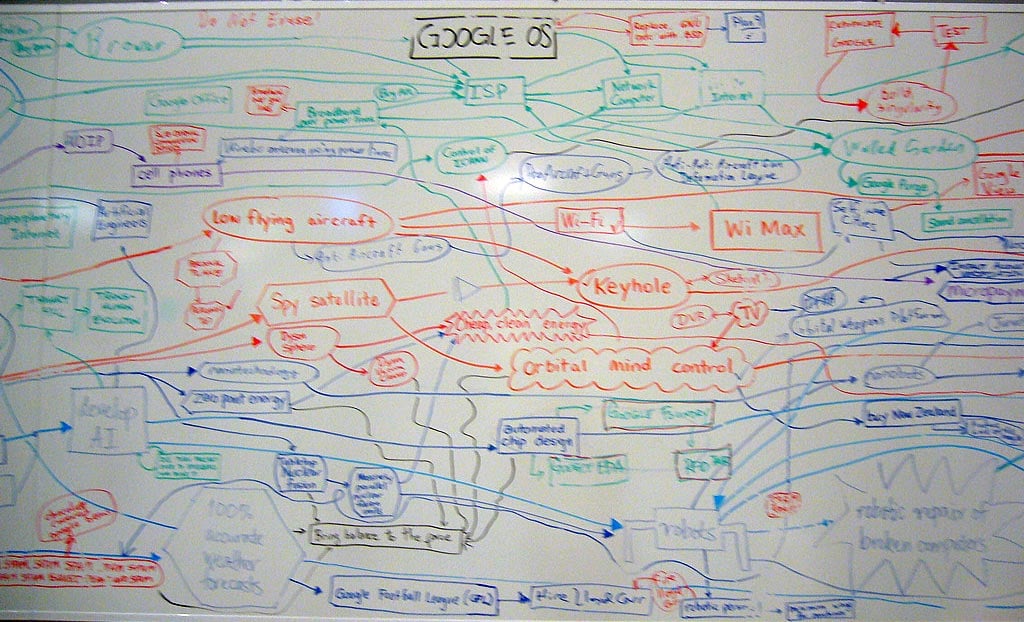
This is the Google that purchased a 270,000sq ft interconnect facility in New York in 2005. The Google that has a division engaged in acquiring dark national, international and metro-fiber. Is investing heavily in consumer WiMax, a mobile phone platform, mobile applications, oh and spectrum

Still think Google is a search engine and advertising company? Read on...

In 2006 Google was recognised by the American Registry of Internet Numbers (ARIN) as an ISP, when it was granted a large allocation of IPv6 addresses.

At the time of the allocation ARIN's director of external relations , Richard Jimmerson, said. "Any organization that has received (IPv6 addresses) has met that criteria -- and that would include Google,"

Note: IP v6 will enable the Internet address space to several trillion, trilion addresses, more than enough to absorb the current 4 billion IPv4 Internet addresses several times over. They must be planning an awfully big grid network, or is there more to it than meets the eye?

Nervous now? Get in line behind Microsoft; a queue is forming.

Tuesday, February 19, 2008

ISP Executives in firing line as Governments move on online privacy

Senior Executives within ISPs will be calling in the lawyers this week.

Why? well it's been an interesting week for on-line privacy, freedom of speech and data protection; with the ISPs being moved firmly centre stage again.

In the UK, the Labour government has presented a Green Paper that will coerce ISPs to monitor their customers Internet traffic for illicit content. Recidivists will have their connection cut off, and to stop them doing it again, their names could be entered into a central database of law breakers, to be circulated to other ISPs, government agencies and potentially even to the owners of the content.

In the USA, the Protect America Act has been passed allowing the NSA to filter the day to day emails and web content of both Foreign and US Citizens, in the ongoing search for Al Queda.

Finally, Tiny Californian ISP Dynadot which hosts whistle blower site Wikileaks was forced to hand over the site, contents, supporting literature and all log data to the courts.

So what is the potential fall out for the service providers?

The US government has stated that ISPs who voluntarily co-operate will be protected from litigation by their customers. But we know from experience that won't stop the lawyers having a bash at a few multi-billion$ class actions.

The UK Government has also promised protection for the ISPs. But refusal by the media industry to indemnify the likes of Tiscali against costs involved in fighting prosecution, has already caused that company's attempt to implement the "three strikes" proposal to collapse in disarray. As the process is equivalent to asking the postal service to open and vet every package and letter in the system, there is surely plenty of scope for litigation.

Even after the legislation I foresee many IT Illiterate parents carted away as their kids continued to download music without their knowledge, as well as the media industry choosing to pursue teenagers for individual criminal actions.

It's just a matter of time before ISPs find themselves under siege from the lawyers of those prevented from accessing the Public Internet, email and possibly even phone services, or for abetting the media companies in malicious prosecutions.

Dynaspot shows that ISPs will increasingly being held accountable for the content and themes of web sites that they host, and the authorities will support action against them.

So why should the Senior Executives worry; well there is currently little protection in law that will protect them from irate customer. Reviewing the 2002 Electronic Communications Act (figleaf) passed to protect ISPs who remove content from customers websites.

The Dynaspot case is the final proof that if ISPs don't co-operate they will face court action, heavy fines and even jail.

Oh you're outside the US / UK! "Don't get comfortable folks" - the gaming industry thought they were safe until their CEOs started finding themselves held in US jails for wire fraud and racketeering.

Those ISPs in hosting havens like Finland and Norway should bare in mind that a US arrest warrant cost Swedish Skype founder Niklas Zennstrom $100m, he can afford it, but can you!